

Gavin is dyslexic. But with the library’s help, his reading level has skyrocketed.

Gavin, 8 years old, has always struggled to read. At a very young age, he was diagnosed with dyslexia, a learning disorder which makes understanding letters very difficult. “b’s” become “p’s” and “e’s and “c’s” are difficult to tell apart. On top of that, Gavin has difficulty seeing due to a pointed lens in his left eye, affecting his depth perception permanently. All of this has made reading feel like an insurmountable mountain. But if reading is so important to honing language skills and building confidence, how would he develop that skill? That’s where the library came in.
Gavin and his mom Roxann signed up together for the Summer Reading Challenge at the Saline County Library. This program incentivizes kids and adults to read every day (no matter how long!) by awarding prizes at different milestones. The final goal is to read for 40 days over the summer while school is out.
We spoke to Gavin’s mom Roxann to learn more about Gavin’s reading journey and how the library helped.
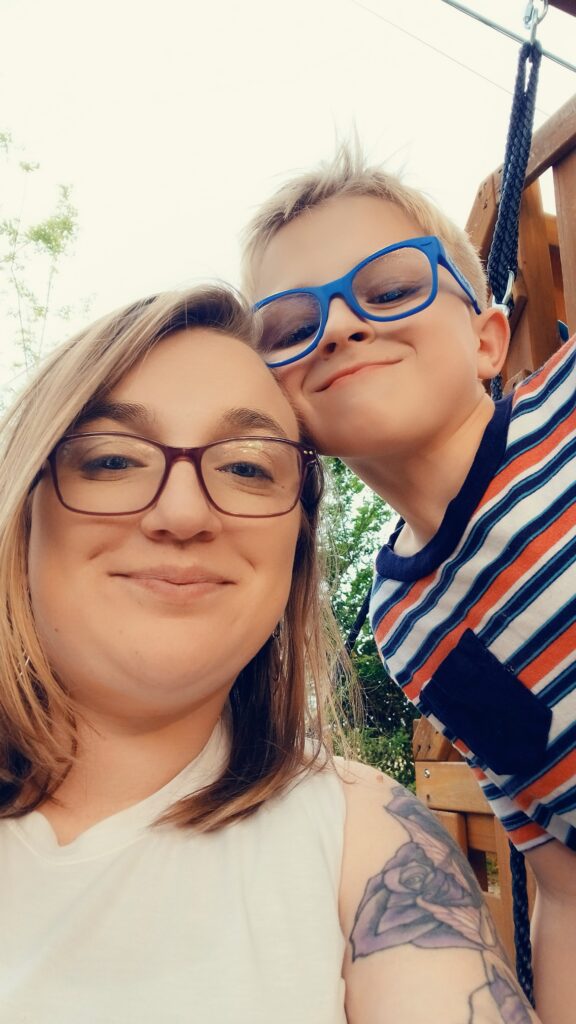
When did you first notice that Gavin was struggling to read?
Roxann: I knew Gavin was struggling a little during 1st grade, but it wasn’t until September of his 2nd grade year that I truly realized how significant the struggle was. His 2nd grade teacher brought it to my attention, and we learned that Gavin was reading at approximately a Kindergarten level while he was in 2nd grade.
That was a hard thing to hear as a parent.
His teachers were concerned that, even with a 504 Plan in place, he might not be able to close the gaps quickly enough to successfully move into 3rd grade. As a mom, there were a lot of emotions that came with that—worry, fear, and wondering how we were going to help him catch up without making him feel like he was somehow different or less capable than everyone else.
What I didn’t know then was that this would become the beginning of learning how Gavin’s brain works and, more importantly, learning how to help him believe in himself.
As a parent, what have you learned about dyslexia and treating it?
Roxann: The biggest thing I have learned is that dyslexia does not mean there is something wrong with your child. Their brain simply learns differently.
I think the way we talk about dyslexia matters so much. I never want Gavin to grow up thinking that because he has to work harder at reading or needs different tools, he is somehow less than his classmates or friends. I remind him that needing a different way to learn doesn’t make him less smart, less capable, or less deserving of success.
His dyslexia teacher, teacher, tutor and the youth service Librarians have taught us so much about finding tools that work with his brain instead of trying to force his brain to work like everyone else’s. One thing that really surprised me was learning about cursive. His dyslexia teacher explained that cursive can be helpful for some students with dyslexia because the letters are more distinctive and connected, which may make them less likely to be confused or reversed. It was something I had never thought about before.
We also learned not to get so caught up in what “grade level” a child is reading on. His teachers and tutor and the youth service Liberians helped us understand that it was more important for Gavin to read something he could successfully read and enjoy (even if that meant board books) because confidence was the foundation he needed to keep moving forward.
Once Gavin became confident reading longer board books, something amazing happened… He started reading graphic novels. And suddenly, reading wasn’t just something he had to do. It became something he actually wanted to do.
A note about graphic novels: The librarians of Saline County Library encourage many parents to think about introducing their children to graphic novels, particularly those with difficulty reading. Comics help readers by providing illustrated context for what is happening in the story. Dialog and narration is divided into small portions that are easier to read because they are less intimidating than a full page of text. And many comic artists are even trained in ways to make their text as legible as possible for their readers – a holdover from when classic “floppy” comics were printed on the cheapest paper possible. Reading graphic novels certainly helped out Gavin – maybe it can help your child, too!
How has Gavin’s reading improved after participating in the Summer Reading Challenge?
Roxann: In April, toward the end of 2nd grade, Gavin was at approximately 49% reading accuracy. By August 18, just as he was starting 3rd grade, he had reached 74% reading accuracy. Over the summer, Gavin participated in a tutoring “bootcamp” with his tutor, and we also participated in our Library’s Summer Reading Challenge.
We are so incredibly happy that we did.
The numbers are exciting, but what those numbers represent is even more meaningful to us. They represent hours of practice, frustration that turned into perseverance, and a little boy who kept trying even when reading was hard.
How are you seeing Gavin’s confidence growing as he learns to read?
Roxann: This is probably the part of Gavin’s journey that means the most to me as his mom.
At the end of 2nd grade, Gavin was only 9 points away from scoring into the 3rd-grade level on his ATLAS test. This kid showed up and showed out. Once he was given the right tools, support, and encouragement, he started making progress. And we began seeing that progress everywhere.
He started raising his hand more in class. He started participating in discussions. Homework time wasn’t as dreadful. He was beginning to believe that maybe he could do this.
But then came the moment that made me realize just how far he had come. Last week, I picked Gavin up from school. He wasn’t even fully in the car before he started talking. He said, “Mom, I found a book type I really like, just like Gma said I would! But they’re all checked out at my library. Can you get them at your library for me? I want the I Survived graphic novels, and I know the librarians can help me find them.”
This was the same little boy who had been reading at a Kindergarten level in 2nd grade. The same boy who had struggled and wondered if he could keep up. And now he was getting into the car after school asking me to find more books for him. Not because his teacher told him to. Not because it was homework. Because he had found a type of book he loved and he wanted to read more.
As a parent, that is the victory I will always remember.
The Summer Reading Challenge didn’t just help Gavin practice reading. It helped him discover that he could be a reader. And sometimes, I think that’s the most important thing we can give a child – the opportunity to find something they love, the tools to succeed at it, and the confidence to believe that they can do it without the weight of expectation.
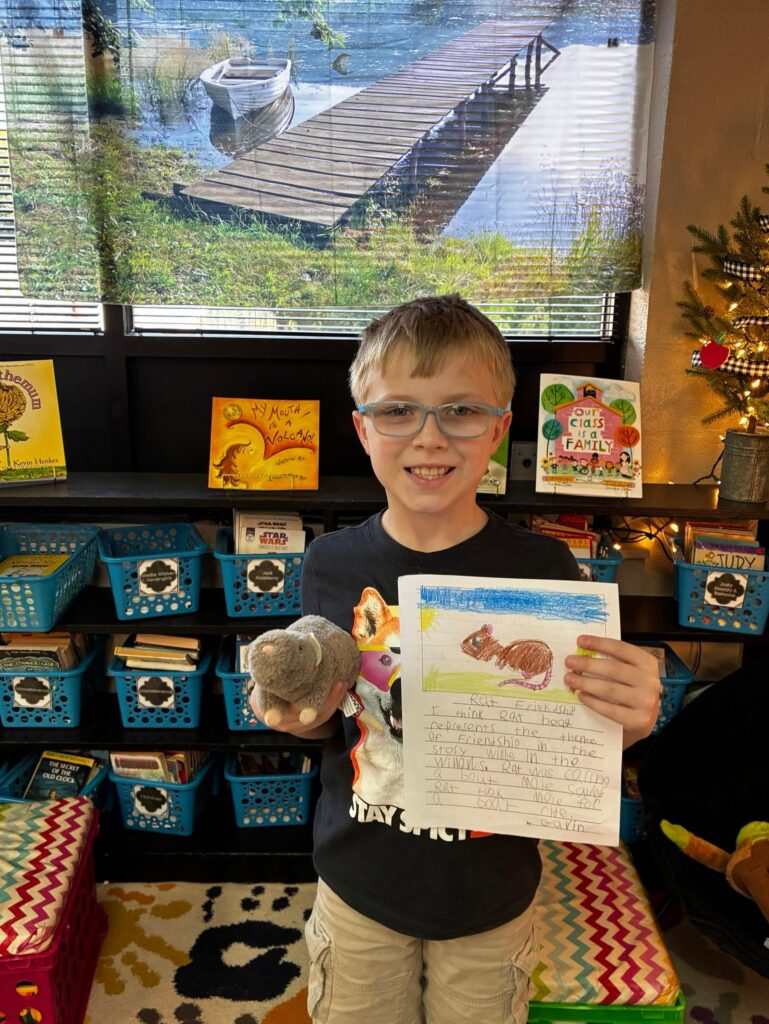
You can share your story, too.
We’d love to hear how the library impacted you and your family!